
Interview with Britannia's MD on how she proposes to steer the company.

Most of the labourers in manufacturing plant are migrant workers. With them moving back to native places, there is going to be a huge challenge.
While FMCG companies were not barred from carrying out their operations during the 21-day lockdown, since most manufacture staples and essential products, capacity utilisation remained poor, owing to the restricted movement of raw materials, finished goods, and labour.

Demand for fast-moving consumer goods (FMCGs) went up last month across India, as kirana stores stocked up their shelves in anticipation of a sizzling summer, according to data by retail intelligence firm Bizom. There was a spike in beverages sales across the country despite inflation inching up in February after moderating downward previously, Bizom noted.


The factory, which had become synonymous with Vile Parle station, is being shut down due to lowering production output
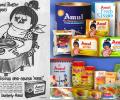
Pond's, Parle-G, Cadbury, Asian Paints and Amul have captured the changing face of India through the seven decades

Sugar is a key input for many of these companies and, since January this year, sugar prices have risen by over 40 per cent. In fact, there is further scope for increase with the weak monsoons. Further, imports too will be costlier this year despite being duty free, as international prices of sugar have reached a 28-year high because of heavy import demands from India and Mexico and lower harvesting in the top sugar-growing country Brazil.
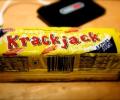
The oldest brand in the non-salt biscuits segment is fighting back to regain market share

Besides, the ongoing war between Russia and Ukraine has also added another blow to FMCG makers as they expect a rise in the prices of wheat, edible oil and crude. Companies such as Dabur and Parle are watching the situation and will undertake calibrated price increases to mitigate the inflationary pressures.
With less than a month to go for the two mega television shows - Kya Aap Paanchvi Pass Se Tez Hai of Star Plus and the BCCI-promoted Indian Premier League on Sony - companies have lined up in right earnest for sponsorship deals with the broadcasters. Star Plus has signed on a string of advertisers for the Shah Rukh Khan-anchored show. These include confectionery brand Halls, Pidilite Industries, Havells India, L'Oreal India, Tata Sky, Parle Products etc
However, the government's draft policy on e-commerce companies has forced consumer companies to also adapt to the changes. For Dabur India, e-commerce channel continues to be a key driver of growth in urban India. The contribution of online sales to its entire portfolio is at six per cent compared to 1.5 per cent before the pandemic.

In her first address to a joint sitting of the two Houses in the new Parliament building in which she touched on varied issues ranging from insurgency to inflation, Murmu said a country can progress at a fast pace only when it defeats the challenges of the past and puts maximum energy into building the future.
Feeble demand in rural areas of the country has affected sales of fast-moving consumer goods (FMCG) in September as compared to August, which saw heavy stocking ahead of the festival season, according to the data of Bizom, a retail intelligence platform. Sales in rural India fell 14.3 per cent while urban sales growth stood at 1.1 per cent in September as compared to the previous month. Overall FMCG sales fell by 9.6 per cent in September as compared to August.

Consumer goods firms and auto companies are witnessing an upturn in rural demand, which had been lagging for most of FY24. Expectations of a bumper rabi crop harvest have helped turn the tide. The Reserve Bank of India's (RBI's) Monetary Policy Committee kept the repo rate unchanged last week, noting that as rural demand catches up, consumption is expected to support economic growth in 2024-25.
Fast-moving consumer goods (FMCG) sales continued to be lower in June compared to May with urban sales witnessing a steeper decline than rural. Sales of goods from shampoos to biscuits stayed lower due to inflationary pressures on commodities. This pushed consumer companies to continue taking price hikes, thus impacting demand, according to data by Bizom.

Bisleri International to launch a fizzy mango drink called Fonzo in April

Parle Agro had sold its popular and iconic soft drink brands namely Thums Up, Limca, Gold Spot and Citra, to Coca-Cola in 1993 and had also signed a non-compete agreement for 10 years.

The ICMR-National Institute of Virology has been regularly undertaking studies to understand the protective efficacy of COVID-19 vaccines against emerging variants.

Future Group and V-Mart have put in place systems to prevent panic buying at their neighbourhood grocery stores.

Even as raw material prices start cooling off from their peaks, fast-moving consumer goods (FMCG) companies' margins are expected to remain under pressure at least in the next quarter. This is because commodity prices continue to remain high year-on-year (YoY). Consumer companies will also continue to increase rates as they have been taking price hikes in a staggered manner. They have not yet passed the entire price increase of raw materials to consumers.
A break-up of business shows that 75% of a firm's turnover is led by volume growth, while 25% is price-led. Companies such as Britannia, Nestl, Dabur, Marico, Kellogg, Parle Products, and Hindustan Unilever have increasingly focused on smaller packs of their key products, aimed at improving sales.

It is Mumbai's favourite festival and is celebrated each year with fervour and frenzy. But when the city welcomes "Ganpati Bappa" this Friday, the celebrations will be low key. With a cap on the size of idols, ban on processions and restrictions on devotees visiting pandals, celebrations are toned down for the second year in a row. Festival budgets have shrunk and as a result, corporate sponsorships have dried out.

People flock to electronics shops to buy air conditioners.

In the past month, wheat prices have increased 6.3% as production is expected to be 1.5% lower, in terms of crop acreage, than the earlier estimate

on Thursday adjourned sine die, ending the four-week-long second leg of the Budget session, during which treasury and opposition members locked horns over Rahul Gandhi's 'democracy' remark and the Adani issue.

The company expects Bournvita Crunchy to strengthen its presence in the cookie segment.

There were 52 launches during January-June 2015, compared with 29 in the year-ago period and 32 in 2013.

However, members requested the government and the presiding officers of both the House to end the proceedings early citing the festive season and New Year celebrations ahead.

Jiomart B2B is the latest among organised supply-chain companies to bite the bullet, shutting down its warehouses, and asking its employees to leave. Why are companies finding it difficult to sustain the supply-chain business? Experts point out that gross margins in supplying fast-moving consumer goods (FMCGs) are very low.

As rural demand tapers, companies are back at the drawing board, firming up plans to beat the unexpected slowdown in sales.

Sanjiv Mehta, chairman of the country's largest consumer goods company, HUL, believes that the second wave of the Covid-19 pandemic between April and June this year has been a mere pause in India's consumption story, and that it will not change the country's overall growth trajectory. India is poised for growth, especially in the fast-moving consumer goods (FMCG) sector, Mehta told shareholders at the company's annual general meeting on Tuesday. The signs of recovery are becoming evident with many states lifting lockdown restrictions in recent weeks.

A young couple sharing a laugh - in the living room over a Polish joke book, on the beach, in the rain - with the tagline, "Made for each other", hung from billboards at prominent street corners from the 1960s to the 1990s. It was a campaign for one of the largest selling cigarette brands in India, Wills (Navy Cut) from the ITC stable, that resonated with a generation of smokers and non-smokers alike till the curtains came down on tobacco advertising in 2004. As we prepare to welcome 2024, ITC has metamorphosed from a tobacco giant into a conglomerate straddling multiple large-sized businesses. In the mind space of Gen Z or millennials, the company represents a gamut of branded products - from frozen food (ITC Master Chef), noodles (YiPPee!), and cookies (Sunfeast) to snacks (Bingo!) and notebooks (Classmate), and so on and so forth.

Parle Agro, which sells beverages such as Frooti in small tetra packs, has already started importing paper straws. Dabur India, which sells its fruit juices in tetra packs under the brand Real, is also considering importing paper straws.

Top companies reported that despite most of them making staples and essential products, movement of raw material, goods and labour remained restricted, impacting sales.

As many as 80 brands are riding the digital and television broadcast this year.

As the second wave of the pandemic ebbs and the daily caseload falls, the struggles of the urban poor have come into focus. Many have suffered income and job losses after two successive waves. The second wave, in particular, has seen the poor being hit hard on account of lack of medical and financial help. For the fast-moving consumer goods (FMCG) companies this has meant that an important segment is under severe distress.

Facebook and Google officials in New Delhi on Tuesday deposed before the Parliamentary Standing Committee on Information Technology on the issue of misuse of social media platforms.
